The Art of Doing Nothing: Why Boredom Has Become a Privilege — and Why Every Kid Needs It
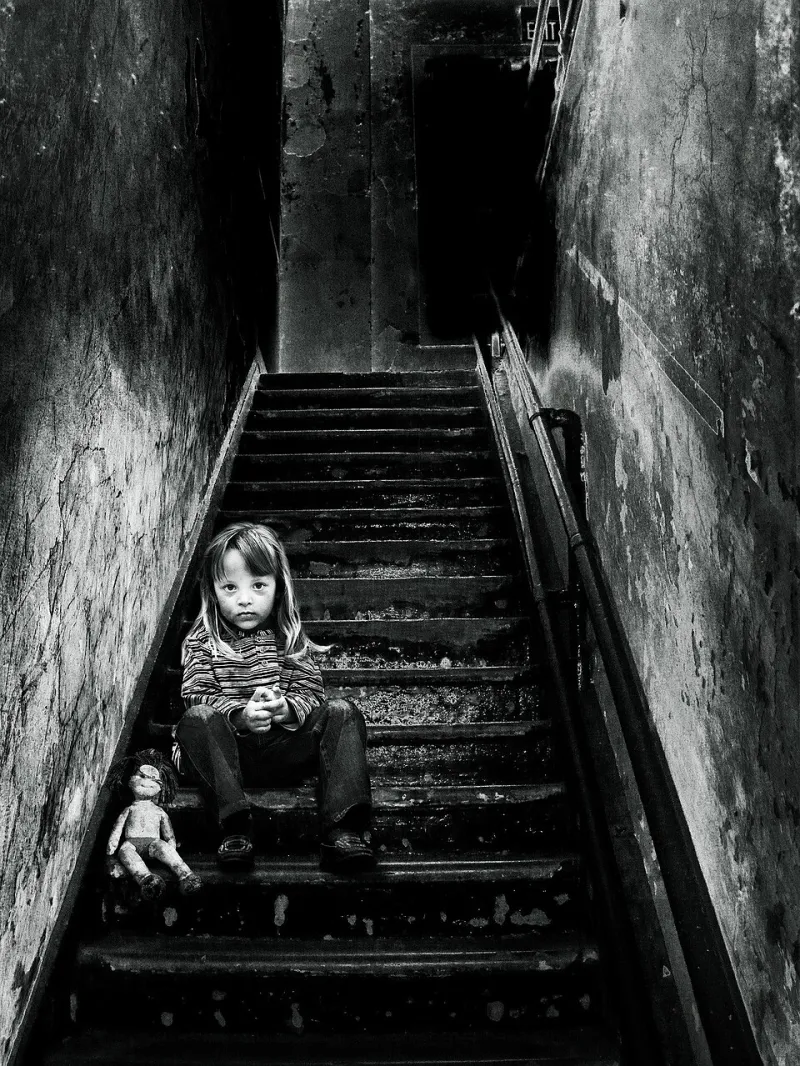
Photo: DarkWorkX, CC0, via Wikimedia Commons
The Art of Doing Nothing: Why Boredom Has Become a Privilege — and Who's Actually Losing Out
Somewhere around the third week of summer vacation, a certain kind of child — usually one with a packed schedule of camps, classes, and enrichment activities — will flop dramatically onto the couch and announce, "I'm bored."
And somewhere around the same time, a different kind of child — one whose family is working hard to secure a better future, and who has internalized the message that every spare moment should be spent getting ahead — will be sitting in a tutoring session, a test prep class, or an organized program designed to give them an edge.
Neither of these children is having a bad childhood. But one of them is getting something the other isn't: the chance to be genuinely, productively, creatively bored.
And yes, that matters more than you might think.
We've Decided Boredom Is the Enemy
At some point in the last few decades, American culture made a collective decision that idle time in childhood was a problem to be solved. Summers became logistical operations. Weekends filled with soccer, coding classes, violin lessons, and language tutoring. Afternoons got scheduled. Downtime became something to feel guilty about.
The intentions behind all of this are genuinely good. Parents want their kids to have every advantage. They want them to be competitive, capable, and confident. In a society where the gap between those who make it and those who don't feels increasingly wide, the pressure to prepare children for success starts earlier and runs harder than ever before.
But in the rush to fill every hour with something useful, something important got lost.
What Actually Happens in a Bored Brain
Here's what neuroscientists and developmental psychologists have been quietly establishing for years: the brain doesn't go offline when it's bored. It goes to work.
When children are left without external stimulation — no screens, no scheduled activities, no adults directing their attention — they enter what researchers call a "default mode." This is when the brain's default mode network activates: a set of regions associated with imagination, self-reflection, empathy, and creative problem-solving.
In plain terms: boredom is when kids make stuff up. They invent games. They build worlds out of couch cushions and cardboard boxes. They figure out how to entertain themselves, navigate conflicts with siblings, and discover what they actually like. They daydream. And daydreaming, it turns out, is cognitively serious business.
Dr. Stuart Brown, a researcher who has spent decades studying play, describes unstructured time as essential to the development of what he calls "play literacy" — the ability to be imaginative, adaptive, and resilient. Children who never experience genuine boredom, he argues, may struggle to access these capacities when they need them most.
The research on mental health is equally compelling. Studies have linked overscheduled childhoods to higher rates of anxiety, lower frustration tolerance, and reduced capacity for intrinsic motivation — the ability to do something for the joy of it rather than for a reward or an outcome. Kids who are always being directed toward the next productive activity can struggle to figure out what they actually want when nobody's telling them.
The Upward Mobility Trap
Here's where this gets complicated — and where it becomes an equity issue, not just a parenting philosophy debate.
For families with financial security, the choice to let kids be bored is genuinely a choice. They can opt out of the third enrichment program. They can say no to the extra tutoring. Their children will still have access to good schools, stable environments, and the kind of social capital that opens doors.
For families who are working to move up — first-generation college aspirants, immigrant families who have sacrificed enormously for their children's futures, parents who know exactly what it costs to fall behind — the calculus looks very different. Unstructured time can feel like a luxury they literally cannot afford.
If your child's peers are spending summers in coding boot camps and your child is watching clouds from the backyard, the fear is real: will they fall behind? Will they miss something? Will this be the thing that closes a door?
This pressure is not irrational. It reflects genuine structural inequality in how opportunity is distributed in America. But it creates a painful irony: the children who are most aggressively scheduled in pursuit of upward mobility may be losing access to the very capacities — creativity, resilience, intrinsic motivation — that research suggests are among the strongest predictors of long-term success and wellbeing.
Meanwhile, children from wealthy families, whose futures are cushioned by generational wealth and social networks, can afford to be bored — and are, increasingly, reaping the developmental benefits of it.
The Pressure Doesn't Just Fall on Kids
It's worth saying clearly: this isn't a critique of parents. The families pushing their kids hardest are often the ones who love them most fiercely, who understand the stakes most clearly, and who are making rational decisions in a system that rewards relentless preparation.
The problem isn't individual parenting choices. It's a broader cultural narrative that treats childhood as a resume-building exercise rather than a period of human development with its own intrinsic value — and a structural reality that makes opting out of that narrative feel dangerous for families with less margin for error.
Making Space for Nothing — Practically
So what can families actually do, regardless of their resources?
Start small. Unstructured time doesn't have to mean an entire unscheduled summer. It can mean one afternoon a week with no plans, no screens, and no agenda. Let your child be bored. Resist the urge to fix it. Give it twenty minutes before anything interesting starts to happen.
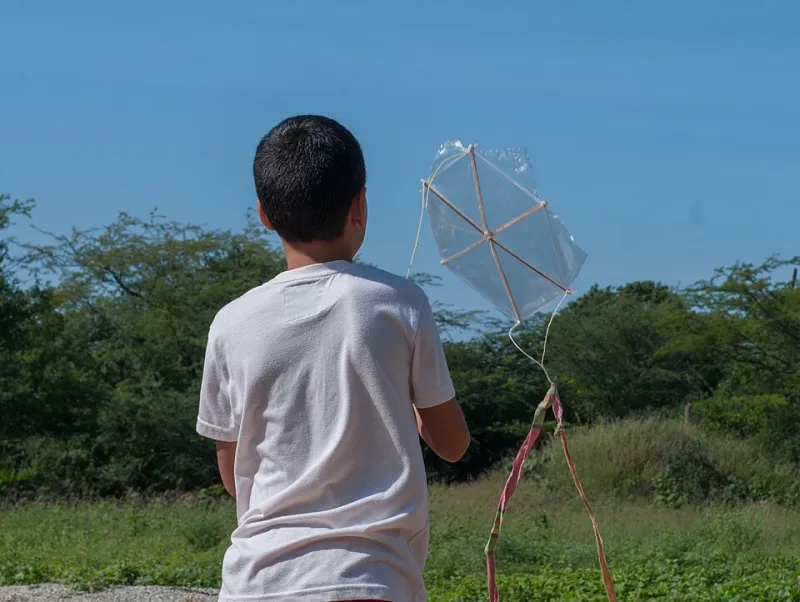
Reframe what "productive" means. A child building an elaborate imaginary city out of Legos for two hours isn't wasting time. She's developing spatial reasoning, narrative thinking, and sustained attention. A child who spends an afternoon figuring out how to make a kite out of garbage bags isn't falling behind. He's problem-solving.
Advocate for unstructured time in schools. Many schools have cut recess and free play in favor of academic time. The research doesn't support this trade-off. Parents, community members, and advocates can push back — and push for policies that protect children's right to unscheduled, child-directed time during the school day.
Resist the comparison spiral. The pressure to match what other families are doing — especially on social media, where every child's enrichment activity is photographed and posted — is real. But comparison is a trap. Your child's development is not a competition.
What We Believe at Sun Child
Every child deserves the chance to stare at the ceiling and wonder. To make something up out of nothing. To be momentarily, gloriously, productively bored.
That might sound like a small thing. But it's actually one of the most important things childhood has to offer — and right now, not every child is getting it equally.
The brightest futures aren't built only in classrooms and tutoring centers. They're built in the quiet, unscheduled hours when a child's mind is free to wander — and to discover, in that wandering, exactly who they are.