Sun Child Nurturing Every Child's Brightest Future

Sun Child

Nurturing Every Child's Brightest Future

Latest Articles

When Sunday Night Turns Sour: Reading the Signals Your Kid's Body Sends
Child Wellness

When Sunday Night Turns Sour: Reading the Signals Your Kid's Body Sends

A stomachache that arrives like clockwork every Sunday evening is rarely a coincidence — and usually not a stomach bug. Here's how to read what your child's body is saying about the week ahead, and how to build a gentler landing into Monday.


Free, Open, and Full of Trusted Adults: The Case for Your Local Library
Child Advocacy

Free, Open, and Full of Trusted Adults: The Case for Your Local Library

No application, no fee, no proof of anything — just a door that opens. Public libraries may be the most underrated piece of child welfare infrastructure in America, and they need families showing up loud on their behalf.

Real Jobs for Small Hands: Why Kids Need Work That Actually Counts
Community & Belonging

Real Jobs for Small Hands: Why Kids Need Work That Actually Counts

Chores aren't a punishment disguised as a life lesson — they're one of the most reliable ways kids learn competence and discover they're needed. Here's why the fighting usually isn't about the dishes, plus a realistic task list by age and scripts that turn nagging into teamwork.

Community & Belonging

Sunlight, Not Spotlight: The Grown-Up Who's Genuinely Glad to See Your Kid

Every neighborhood has one — the coach, the crossing guard, the librarian, the neighbor who always says hello like they mean it. Here's why those small, repeated moments of recognition do more for a child than we give them credit for, and how parents can quietly help those relationships grow.

Between the Last Bell and Dinner: Inside America's After-School Gap
Child Advocacy

Between the Last Bell and Dinner: Inside America's After-School Gap

The hours from 3 to 6 p.m. are some of the most consequential in a kid's day — and the most unequal. A look at what the after-school gap actually looks like for working families, what communities are building to close it, and the questions every parent should ask before signing up for a program.

Sorry Isn't the Finish Line: Raising Kids Who Can Repair Without Falling Apart
Child Wellness

Sorry Isn't the Finish Line: Raising Kids Who Can Repair Without Falling Apart

Forced apologies teach kids to perform regret, not to make things right. Here's a practical, family-tested script for building real accountability — the kind that lets a child own a mistake without deciding they're a bad person.

Built Different: Understanding Why Your Child Either Rolls With Change — or Falls Apart From It
Child Advocacy

Built Different: Understanding Why Your Child Either Rolls With Change — or Falls Apart From It

Some kids can pivot on a dime — a canceled plan, a new school, a surprise dinner and they barely blink. Others unravel at the smallest deviation from routine, and no amount of reassurance seems to help. Neither child is broken. They're just wired differently, and understanding that difference could change everything about how you parent.

Likes, Filters, and Broken Mirrors: How Social Media Is Quietly Distorting the Way Kids See Themselves
Child Wellness

Likes, Filters, and Broken Mirrors: How Social Media Is Quietly Distorting the Way Kids See Themselves

Every scroll through a feed full of highlight reels is quietly teaching kids that their ordinary life isn't enough. The comparison trap is real, it's relentless, and most children have no idea it's happening to them. Here's what parents need to know — and what they can actually do about it.

Nice Isn't the Same as Yes: Helping Your Kid Learn That Saying No Is an Act of Courage, Not Cruelty
Child Wellness

Nice Isn't the Same as Yes: Helping Your Kid Learn That Saying No Is an Act of Courage, Not Cruelty

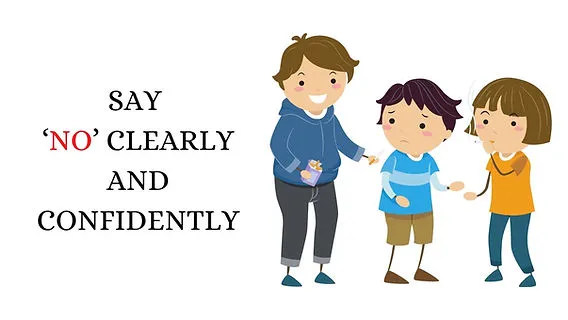
We raise kids to be kind, generous, and cooperative — and those are genuinely good things. But somewhere along the way, many children learn that saying no makes them bad, selfish, or unlovable. That lesson follows them for years. Here's how to help your child unlearn it before it costs them.

Wired Differently: The Real Science Behind Why Some Kids Bend Under Pressure While Others Break
Child Wellness

Wired Differently: The Real Science Behind Why Some Kids Bend Under Pressure While Others Break

When one child breezes through a tough week at school while another falls apart under the same conditions, it's tempting to chalk it up to attitude or effort. But neuroscience tells a much more complicated — and compassionate — story about how kids are built to handle stress differently from the very start.

Do Absolutely Nothing: Why Letting Your Kid Get Bored Might Be the Smartest Thing You Do This Year
Child Wellness

Do Absolutely Nothing: Why Letting Your Kid Get Bored Might Be the Smartest Thing You Do This Year

In a world built around keeping kids constantly entertained, stimulated, and scheduled, boredom has become something parents practically apologize for. But researchers say we've got it completely backward — and that the blank, restless, nothing-to-do moments might actually be building some of the most important skills your child will ever have.

Friends Who Lift, Friends Who Drain: Helping Your Child Tell the Difference Before It Costs Them
Child Advocacy

Friends Who Lift, Friends Who Drain: Helping Your Child Tell the Difference Before It Costs Them

Not every friendship is what it looks like on the surface — and kids often lack the emotional vocabulary to understand why certain relationships leave them feeling worse about themselves. Teaching children to recognize the difference between friendships that genuinely support them and those that quietly chip away at their confidence is one of the most important things a parent can do.

When the Hurt Has No Name: Recognizing the Grief Kids Carry That No One Thinks to Ask About
Child Wellness

When the Hurt Has No Name: Recognizing the Grief Kids Carry That No One Thinks to Ask About

Kids grieve things that don't come with sympathy cards — a home left behind, a family that looks different now, a version of childhood they quietly mourn. When no one names these losses, children learn to carry them alone. Here's how to change that.

Child Advocacy

Playing Small on Purpose: The Hidden Cost When Smart Kids Pretend They're Not

Across American classrooms, gifted kids are making a quiet, painful calculation: be yourself and lose your friends, or shrink your shine and belong. This is the story of what that choice costs them — and what we can do to change it.

Sunrise, Reset: How the First Hour of the Day Can Quietly Change Everything for Struggling Kids
Child Wellness

Sunrise, Reset: How the First Hour of the Day Can Quietly Change Everything for Struggling Kids

The morning hours hold more power over a child's mental health than most of us realize. From light exposure to predictable rituals, science is revealing that how kids start their day can reshape their brains — and their whole outlook — from the inside out.

The Gold Star Trap: What Happens When Achieving Everything Isn't Enough Anymore
Child Advocacy

The Gold Star Trap: What Happens When Achieving Everything Isn't Enough Anymore

She aced every test, earned every award, and still cried herself to sleep on Sunday nights. He made the travel team, kept a 4.0, and couldn't remember the last time anything felt fun. For a growing number of American kids, high achievement has quietly become a prison — and the key to getting out isn't trying harder. It's learning to stop.

Chasing the Light: Why Where You Live Determines How Much Sun Your Child Actually Gets
Child Wellness

Chasing the Light: Why Where You Live Determines How Much Sun Your Child Actually Gets

Not every child wakes up to a sunlit backyard or walks to school through a park. For millions of American kids, geography, poverty, and packed school schedules quietly conspire to keep them in the dark — and the consequences reach far deeper than a vitamin D deficiency. Here's what's really going on, and what families and schools can actually do about it.

Two Kids, Two Internets: The Hidden Ways Screen Time Inequality Is Shaping American Childhoods
Child Wellness

Two Kids, Two Internets: The Hidden Ways Screen Time Inequality Is Shaping American Childhoods

We talk a lot about how much screen time kids get — but we rarely talk about the enormous gap in what that screen time actually looks like. For some children, it means curated learning apps and monitored content. For others, it means hours of passive, algorithmically-driven consumption with no guardrails in sight. That difference is quietly widening the divide between the childhoods America's kids deserve and the ones they're actually living.

Born Brilliant, But Boxed In: The Hidden Forces Keeping Low-Income Kids from Shining
Child Advocacy

Born Brilliant, But Boxed In: The Hidden Forces Keeping Low-Income Kids from Shining

Across America, thousands of gifted children grow up in low-income communities where their extraordinary potential quietly goes unrecognized and unsupported. Systemic barriers — from underfunded schools to absent mentors — build an invisible ceiling that even the brightest kids can't break through alone. Here's what's really happening, and what we can actually do about it.

Lights Out, But Wide Awake: The Hidden Sleep Crisis Quietly Derailing American Kids
Child Wellness

Lights Out, But Wide Awake: The Hidden Sleep Crisis Quietly Derailing American Kids

Millions of American kids are lying in the dark, staring at the ceiling, exhausted but unable to sleep — and the consequences go far deeper than just feeling tired the next morning. From cratered grades to crumbling mental health, childhood sleep deprivation has quietly become one of the most urgent wellness issues of our time. Here's what's driving it, what it's costing our kids, and what families can actually do about it.