Wired Differently: The Real Science Behind Why Some Kids Bend Under Pressure While Others Break
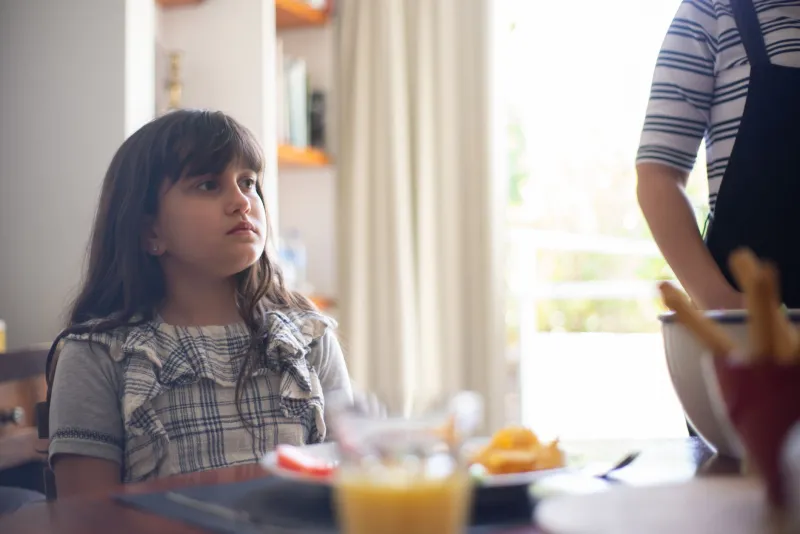
Watch two kids face the same spelling test, the same crowded lunch room, the same Friday afternoon meltdown trigger — and you might see two completely different outcomes. One shrugs it off. The other spirals. And if you're the parent of the spiraling kid, you've probably asked yourself some version of the same painful question: What am I missing here?
Here's what we want you to hear first: it is not about willpower. It is not about character. And it is almost certainly not about how hard you've tried.
The truth is rooted in biology, early experience, and a nervous system that was shaped long before your child ever walked into a classroom.
Your Child's Nervous System Is Telling a Story
Every child is born with what researchers sometimes call a "stress response threshold" — essentially, the point at which incoming pressure tips the brain into fight-or-flight mode. This threshold isn't fixed, and it isn't fair. It's shaped by a combination of genetics, prenatal environment, early caregiving experiences, and the ongoing development of the prefrontal cortex, the part of the brain responsible for emotional regulation and decision-making.
For some kids, that threshold is relatively high. Stress hormones like cortisol spike and then return to baseline fairly quickly. Their nervous systems are, in a sense, more elastic. For others — through no fault of their own — the threshold is lower, the spike is higher, and the return to calm takes much longer.
Researchers at the University of California have described this as the difference between "dandelion" children and "orchid" children. Dandelions grow almost anywhere. Orchids need very specific conditions — but when those conditions are right, they bloom in ways dandelions simply can't.
Neither is better. Both need tending.
What Early Experiences Actually Do to the Brain
Here's where it gets important for families navigating real life: early experiences — especially in the first five years — physically shape the architecture of a child's stress response system.
Children who experienced inconsistent caregiving, food insecurity, neighborhood violence, or even the ambient stress of a household under financial strain may have nervous systems that learned to stay on high alert. This is adaptive. In an unpredictable environment, a hair-trigger stress response keeps you safe. But it also means that in a school environment, a social situation, or a homework battle, that same system fires when the threat is far less real.
This isn't damage. It's adaptation. And it can shift — with the right support, consistency, and understanding from the adults around them.
Conversely, children who had warm, responsive early caregiving tend to have better-regulated stress systems, not because they were sheltered from hard things, but because they learned — neurologically — that hard things pass and help arrives.
Temperament Is Real, and It Deserves Respect
Beyond early experiences, temperament — the inborn personality tendencies your child arrived with — plays a massive role in how pressure lands.
Highly sensitive children, who process sensory and emotional information more deeply, often experience stress more intensely. They're not being dramatic. Their brains are literally registering more. Research by psychologist Elaine Aron suggests that roughly 15 to 20 percent of children fall into this category, and they thrive when their sensitivity is treated as a feature rather than a flaw.
Other temperamental factors — adaptability, intensity, persistence, initial reaction to new situations — all contribute to what we might call a child's "pressure profile." Understanding your child's profile isn't about lowering the bar. It's about knowing which bar actually fits.
What Parents Can Do: Building a Pressure Map
Rather than applying the same expectations across the board, consider building what we like to call a pressure map for your individual child. Here's how to start:
Notice the early signals. Every child has tells — the behaviors that appear before a full meltdown. Withdrawal, silly behavior, increased clinginess, appetite changes. Learn your child's early warning system and treat those signals as communication, not manipulation.
Identify the triggers that are truly too much. Not every stressor is equal. Some kids fall apart after long social days but handle academic pressure fine. Others are the opposite. Mapping the specific pressure points helps you intervene early and advocate clearly at school.
Distinguish between stretch and overwhelm. Healthy stress — the kind that builds resilience — lives in the stretch zone. It's challenging but manageable, and the child comes through it with some sense of success. Overwhelm is different: it floods the system and often reinforces avoidance. Your job isn't to eliminate stretch. It's to prevent overwhelm.
Build recovery time into the routine. Kids with lower stress thresholds often need significantly more decompression time than their peers. This isn't weakness — it's maintenance. A child who gets that time is far more likely to show up ready to try again.
Narrate the nervous system. Even young children benefit from simple language about what stress feels like in the body. "Your heart is beating fast because your brain thinks something hard is coming. That's normal. Let's help it slow down." This kind of narration builds the emotional vocabulary that eventually becomes self-regulation.
The Comparison Trap Is a Dead End
One of the most harmful things we do — often without realizing it — is compare siblings, classmates, or cousins as though their nervous systems came off the same assembly line. They didn't. Saying "your brother handles this just fine" doesn't motivate a struggling child. It teaches them that something is fundamentally wrong with them.
At Sun Child, we believe every kid deserves to be understood on their own terms. That means resisting the urge to flatten the very real biological and experiential differences that make each child who they are.
The Long Game
Resilience isn't a personality trait some kids are born with and others aren't. It's a skill — more accurately, a capacity — that grows in relationship with safe adults, consistent environments, and the repeated experience of getting through hard things and surviving.
Your child doesn't need to be the kid who never breaks. They need to be the kid who learns, slowly and with your help, that breaking isn't the end of the story.
That's a future worth nurturing — one nervous system at a time.