Drowning in Light: Why the Brightest Neighborhoods Are Producing the Most Sleep-Deprived Kids
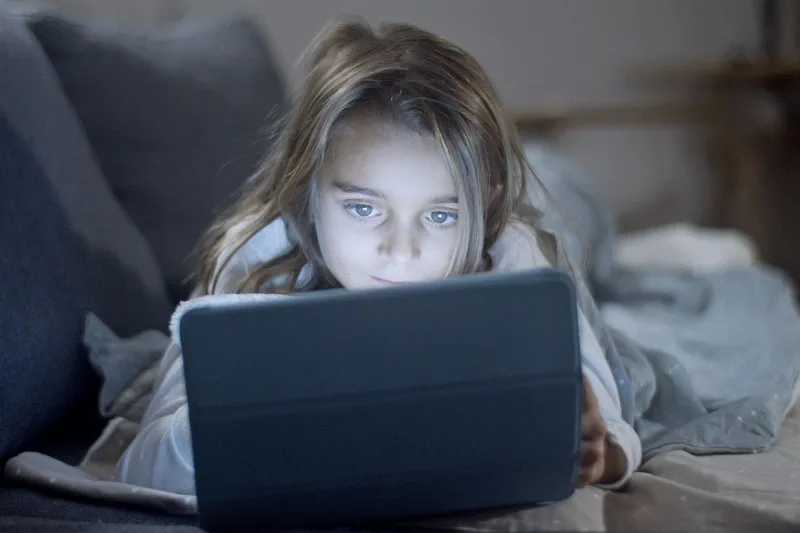
Picture a child trying to fall asleep in a bedroom that never fully goes dark. The streetlight outside bleeds orange through thin curtains. A nightlight glows in the corner. A tablet charges on the nightstand, pulsing with soft blue light. Down the hall, the TV murmurs. Outside, a 24-hour convenience store sign throws light across the ceiling like a slow-moving sunrise that never actually ends.
For a lot of kids in America, this isn't a bad night. It's every night.
And it's quietly dismantling their ability to sleep — which means it's quietly dismantling everything else, too.
What Your Child's Brain Is Waiting For
Here's the basic biology: your child's brain contains a tiny structure called the suprachiasmatic nucleus — basically the body's master clock. This internal timekeeper takes its cues almost entirely from light. When the eyes detect fading light in the evening, the brain signals the pineal gland to start producing melatonin, the hormone that eases the body toward sleep.
The catch? That signal is extraordinarily sensitive to disruption. Even relatively low levels of artificial light — we're talking a bedside lamp, a glowing screen, or light filtering through a window — can delay or suppress melatonin production in children. And kids aren't just smaller adults here. Their eyes are actually more efficient at transmitting light to the brain, which means they're more vulnerable to light-triggered sleep disruption than grown-ups are.
Researchers at institutions like Harvard's Division of Sleep Medicine have documented that children exposed to artificial light in the hour before bedtime can experience melatonin suppression of up to 88 percent. That's not a small effect. That's nearly wiping out the biological signal that tells a child's body it's time to rest.
The Geography of Darkness
Here's where things get more complicated — and more unfair.
Not all neighborhoods go dark at the same rate. Light pollution maps of major U.S. cities consistently show that lower-income urban areas are often the most heavily lit. This isn't an accident. Street lighting in dense urban neighborhoods is frequently installed at higher densities as a public safety measure, and many of these communities also have more commercial signage, more 24-hour businesses, and housing stock — older apartments, row homes, public housing units — that wasn't designed with light-blocking features in mind.
Wealthy suburbs, by contrast, tend to have wider lots, mature tree canopies, better window insulation, and zoning restrictions on commercial lighting. Families in those neighborhoods can more easily create genuine darkness at bedtime.
The result is a kind of light-exposure inequality that almost nobody is talking about. Kids in lower-income communities — kids who often face more stressors, less consistent nutrition, and fewer opportunities to make up for lost sleep — are also the kids least likely to experience the environmental darkness their brains need to fully recover each night.
The Nightlight Dilemma
Inside the home, the picture gets nuanced. Many parents — especially those with young children or kids who experience anxiety — rely on nightlights as a comfort measure. That instinct is completely understandable, and for some children, the reassurance of a dim light genuinely helps them settle.
But not all nightlights are created equal. Research consistently shows that blue-spectrum light — common in LED nightlights, tablets, and phones — is the most potent suppressor of melatonin. Warmer, amber-toned light has a significantly smaller effect on the brain's sleep signaling.
For families navigating this, the practical takeaway is relatively straightforward: if a nightlight is necessary, choose a warm amber or red-spectrum bulb and position it low to the ground, away from the child's direct line of sight. Blackout curtains — increasingly available at affordable price points — can make a dramatic difference in blocking outdoor light sources.
When Rest Is a Privilege
The deeper issue here isn't really about nightlights or even street lamps. It's about the way environmental factors compound to make rest harder to access for the kids who need it most.
Sleep-deprived children show measurable declines in attention, memory consolidation, emotional regulation, and immune function. Chronic sleep disruption in childhood has been linked to increased risk of obesity, anxiety, and long-term cardiovascular issues. For kids already navigating academic pressure, food insecurity, or family stress, losing even an hour of quality sleep per night creates a compounding deficit that's genuinely hard to overcome.
Pediatric sleep specialists increasingly argue that addressing childhood sleep health requires looking beyond individual family habits and toward the environments children actually live in. A child can have the most consistent bedtime routine in the world and still struggle to sleep if their bedroom is lit up like a highway interchange at 10 p.m.
What Families Can Do Right Now
While systemic change takes time, there are real steps families can take today — many of them low-cost or free.
Create a wind-down zone. In the 60 to 90 minutes before bed, reduce all light sources in your child's space. Dim overhead lights, swap screens for books or quiet play, and close blinds or curtains as early as possible.
Invest in window coverage. Blackout curtains or even temporary blackout window film (available at most hardware stores for under $20) can significantly reduce intrusive outdoor light. Some community organizations and family resource centers offer these items through supply programs — it's worth asking.
Audit the nightlight. If your child uses one, check the color temperature. Warm amber options are widely available and work just as well for comfort without the melatonin-suppressing effects of blue-white LEDs.
Talk to your pediatrician. If your child consistently struggles to fall asleep or wakes frequently, light exposure is worth raising as a possible factor. A sleep log tracking light conditions alongside sleep patterns can give your doctor useful information.
A Brighter Morning Starts With a Darker Night
At Sun Child, we believe every kid deserves the conditions they need to thrive — and that includes something as fundamental as a good night's sleep. The science of light and circadian rhythms isn't complicated once you understand it, but putting that science into practice requires acknowledging that not every family has equal access to darkness.
That's a problem worth solving. Because a well-rested child is a child who can actually show up — curious, resilient, and ready to grow into everything they're capable of becoming.