Alone in a Crowd: How We're Failing Kids Who Can't Find Their People — and What Real Communities Do Differently
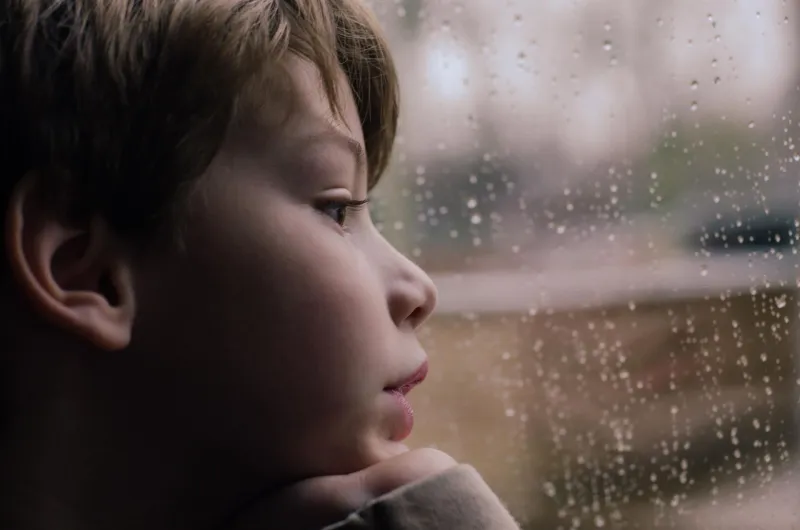
Picture a school cafeteria at lunch. Loud, chaotic, full of kids. Now picture one child sitting alone at the end of a table, staring at a tray, waiting for the clock to move. That image isn't rare. For a startling number of children across the United States, it's Tuesday.
Childhood loneliness has quietly become one of the most urgent — and most overlooked — issues in child welfare today. We talk a lot about screen time, about academic pressure, about childhood obesity. But the growing epidemic of kids who simply don't have friends? That one tends to fly under the radar, tucked behind assumptions that kids are naturally social, that they'll figure it out, that friendship is something that just happens.
It doesn't always just happen. And for kids already navigating tough circumstances, the barriers to connection can feel impossibly high.
The Loneliness Numbers Are Hard to Ignore
Research from the American Psychological Association and other health organizations has consistently shown that loneliness isn't just an adult problem. Studies suggest that somewhere between 10 and 30 percent of school-age children in the U.S. experience chronic social isolation — meaning not an occasional rough week, but an ongoing, persistent lack of meaningful connection with peers.
And the mental health fallout is real. Children who report feeling chronically lonely are significantly more likely to experience anxiety, depression, and low self-esteem. Long-term studies have linked childhood social isolation to increased risks of mental health challenges in adulthood, reduced academic performance, and even physical health consequences. Loneliness, researchers have found, activates the same stress pathways in the brain as physical pain.
For a child still learning who they are, going months or years without a true friend doesn't just feel bad. It shapes the story they tell themselves about their own worth.
Why Friendship Doesn't Come Easy for Every Kid
It would be convenient if social isolation were simply a personality issue — the shy kid who needs to come out of their shell. But the reality is far more structural, and far less fair.
Economic barriers cut kids off before they even start. Friendship among children is often built through shared activities — sports leagues, birthday parties, after-school clubs, weekend playdates. All of those things cost money. Registration fees, gear, transportation, the right shoes — families living paycheck to paycheck frequently can't swing it. When a child can never participate in the activities where bonds get formed, they're perpetually on the outside looking in, even if they're socially confident and eager to connect.
Geography matters more than we like to admit. Kids in rural communities often face wide physical distances between homes and limited public transportation, making spontaneous socializing nearly impossible. Meanwhile, kids in dense urban environments may live in neighborhoods where parents don't feel safe letting them roam freely — the kind of unstructured outdoor time that used to be the primary engine of childhood friendship-building.
Community gathering spaces have been quietly disappearing. The local rec center, the neighborhood park with actual programming, the library with after-school hours — these aren't guaranteed anymore. Budget cuts have shuttered or scaled back many of the third places where kids from different backgrounds used to naturally mix. Without neutral ground, kids default to the social circles already shaped by their school or their block, which can lock certain children out entirely.
Social differences create invisible walls. Kids with disabilities, neurodivergent children, kids who are new to a school or community, children from immigrant families navigating language differences — these groups face compounded challenges in forming friendships, often without adequate support from the adults around them to bridge those gaps.
What the Research Says Actually Helps
Here's the encouraging part: childhood social isolation isn't inevitable, and communities that take it seriously can genuinely move the needle. The research points to a few approaches that make a real difference.
Structured, mixed-group activities with adult facilitation. Left entirely to their own devices, children often default to existing social hierarchies. But when adults intentionally design activities that mix kids across cliques and comfort zones — and then actively facilitate positive interaction rather than just supervising — friendships form across lines that might otherwise never cross. Cooperative games, project-based learning, and team challenges all create conditions where kids need each other, which is often where connection sparks.
Consistent, recurring contact. One study found that it takes, on average, about 50 hours of time together for acquaintances to become casual friends — and 200 hours to become close friends. That means one-off events, while well-intentioned, rarely move the dial. Programs that bring the same kids together week after week, in low-pressure environments, give friendships the time they actually need to develop.
Teaching the skills explicitly. Not every child arrives with strong social skills, and that's okay — but it does mean those skills need to be taught, not assumed. Schools and nonprofits that incorporate social-emotional learning (SEL) into their programming give kids the vocabulary and confidence to initiate friendships, navigate conflict, and repair ruptures when they happen.
What Schools Can Do Right Now
Teachers and school counselors are often the first adults to notice when a child is drifting socially. A few practical approaches that don't require big budgets:
- Peer buddy systems that pair newer or more isolated students with welcoming classmates, with intentional check-ins rather than just a one-day assignment
- Lunch bunch programs where counselors host small groups of students during lunch — a low-stakes way to build connection across social groups
- Classroom norms around inclusion — explicitly discussing what it feels like to be left out, and what it looks like to invite someone in
- Unstructured time with gentle structure — recess with optional activities available so kids who struggle to self-organize have a natural entry point
What Neighbors and Community Members Can Do
Schools can't carry this alone. The neighborhood — remember when that meant something? — has a real role to play.
Community organizations can advocate for and fund free or sliding-scale programming that removes the economic barrier from shared activities. Local libraries can expand their after-school hours and youth programming. Faith communities can intentionally create intergenerational spaces where kids interact with a wider circle of caring adults who know their names.
And individual adults? Sometimes the most powerful thing a neighbor can do is notice. Notice the kid who's always alone. Say hello. Tell their parent that their child seems like a great kid. Create low-key, no-cost opportunities for neighborhood kids to be in the same space — a front porch, a community garden, a pickup game.
Children who feel seen by their community are more likely to feel like they belong in it.
Connection Is a Community Responsibility
At Sun Child, we believe that every child deserves more than just a roof and a meal. They deserve to feel like they matter to someone their own age — to have a person who saves them a seat, who texts them about nothing, who shows up. That's not a luxury. For healthy development, it's a necessity.
The friendship gap is real, it's growing, and it doesn't close on its own. But it does close when communities decide it's their problem to solve — not just the shy kid's, not just the struggling family's, not just the school counselor's.
Every child who finds their people is a child whose future just got a little brighter. And that's exactly the kind of work we're here for.